Odoo Upgrade vs Staying on Old Versions: What Every Business Should Know
A common question many businesses ask during discussions on ERP maintenance is:
“If our current Odoo system is functioning smoothly, why should we upgrade?”
At first glance, a stable system may appear reliable and risk-free. However, ERP stability in the present does not guarantee long-term resilience. In fact, postponing an upgrade often introduces more operational, technological, and financial risks than proactively upgrading at the right time.
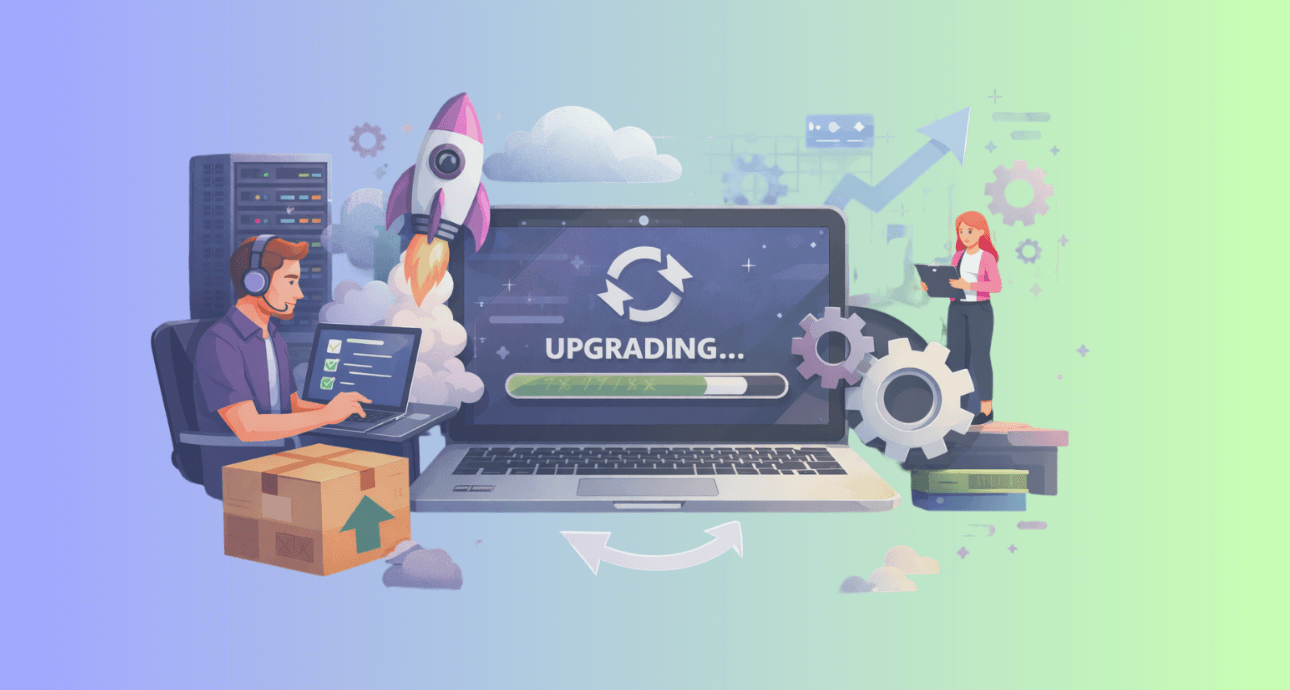
This detailed guide explains why upgrading Odoo is a strategic necessity, not a technical luxury.
1. A Stable System Today Does Not Guarantee Future Readiness
Your existing Odoo version may be fulfilling current requirements effectively. It may be stable, error-free, and supporting day-to-day operations. However, business environments evolve continuously, and an ERP must evolve with them.
Changes occur in multiple areas:
- Tax regulations such as GST, VAT, and e-invoicing
- Banking and payment gateway APIs
- Shipping carriers, logistics platforms, and marketplaces
- Security requirements and cybersecurity standards
- Browser and operating system compatibility
- Industry-specific compliance mandates
An ERP that is stable today may gradually become outdated, incompatible, or non-compliant if it remains unchanged.
A future-ready business requires a future-ready ERP system.
2. Security Risks Increase Substantially Over Time
Every ERP system requires continuous security reinforcement. Older Odoo versions eventually lose official security support. As a result:
- Security patches are no longer released
- Underlying frameworks (Python, JavaScript libraries, Linux dependencies) become outdated
- Vulnerability exposure increases with time
- Attackers actively target outdated software
This can lead to serious consequences, including data breaches, unauthorized access, compliance failures, system volatility, and customer trust issues.
Upgrading Odoo ensures that your ERP benefits from the latest security enhancements, secure coding standards, and modern infrastructure support.
3. Evolving Business Requirements Cannot Be Addressed Efficiently on Older Versions
As an organization grows, operational complexity increases. New workflows, additional automation, deeper reporting, and increased integrations become necessary.
Older Odoo versions struggle to keep up because they:
- Limit customization capabilities
- Require complicated workarounds
- Increase development costs
- Become harder to maintain
- Slow down innovation
Newer versions of Odoo are designed with improved architecture, allowing cleaner customizations and smarter automation with fewer limitations.
4. Performance, Speed, and Scalability Improve Significantly with Each Release
- Faster ORM (Object Relational Mapping)
- Improved PostgreSQL query performance
- Enhanced caching mechanisms
- Better load handling for large datasets
- Optimized accounting and inventory workflows
- A more responsive and cleaner user interface
illustrative Comparison
| Area | Older Version | Newer Version |
| Inventory | Slower validation and reservations | Optimized stock moves and pickings |
| Accounting | Heavy queries and slower reports | Faster report generation and data processing |
| User Interface | Slower rendering and transitions | Modern UI, improved speed, enhanced usability |
5. Third-Party Integrations Reduce or Drop Support for Older Odoo Versions
Most external platforms evolve rapidly. Payment gateways, shipping providers, and marketplaces regularly discontinue support for older API versions.
This affects integrations with:
- Stripe, PayPal, Razorpay, Helcim, Square
- UPS, FedEx, DHL, ShipStation
- Shopify, Amazon, WooCommerce
- Marketing tools like Mailchimp and Klaviyo
Older Odoo versions become incompatible over time, causing:
- API failures
- Integration breakdowns
- Increased downtime
- Forced last-minute patches
Upgrading ensures continued compatibility with critical external services.
6. The Cost of Not Upgrading Is Higher Than the Cost of Upgrading
Many businesses avoid upgrades believing that maintaining a working system is safer. However, delaying upgrades often results in:
- Emergency fixes that are costlier
- Developers reluctant to work on outdated versions
- Migration challenges that grow more complex each year
- Increased downtime risk
- Technical debt that accumulates silently
Proactive, planned upgrades are significantly cheaper and more predictable than reactive, forced transitions.
7. Upgraded Versions Enhance User Experience and Productivity
Odoo consistently improves usability in every version through:
- Better user interface design
- More intuitive navigation
- Improved mobile and tablet compatibility
- Reduced loading time across modules
- More accessible menu structures
Small enhancements in usability collectively lead to substantial productivity gains across departments. A smoother ERP experience increases efficiency, accuracy, and user adoption.
8. Compliance Requirements Continue to Evolve
Government and industry regulations undergo frequent changes. Businesses must adapt quickly to remain compliant.
Examples include:
- Mandatory e-invoicing requirements
- Digital tax reporting formats
- Audit trail requirements
- Data protection and privacy laws
- Industry-specific record-keeping rules
Older Odoo versions may lack built-in compliance capabilities, leading to:
- Costly custom development
- Higher risk of penalties
- Difficulty in passing audits
Newer versions include updated compliance features, reducing legal and operational risk.
9. Vendor and Community Support Declines for Older Versions
Odoo provides active support only for newer and long-term support (LTS) versions. Older versions experience:
- Reduced bug-fix availability
- No security patches
- Limited documentation
- Declining community engagement
Being on a supported version ensures that your ERP remains aligned with the latest innovations, solutions, and ecosystem tools.
When Should You Consider Upgrading Odoo?
| Scenario | Recommendation |
| Using a stable but older version | Begin planning an upgrade |
| Rapid business growth | Upgrade as early as possible |
| Heavy or outdated customizations | Implement a phased upgrade |
| Need for new integrations | Upgrade before integrating |
| Any security concerns | Treat as a priority upgrade |
Upgrading Odoo Is a Strategic Decision, Not a Technical Risk
A structured upgrade plan includes:
- A complete system audit
- Removal of unused customizations
- A phased migration approach
- Rigorous testing
- Controlled go-live execution
When handled professionally, upgrading is a smooth process that strengthens the foundation of your business operations.
Conclusion
Upgrading Odoo is not merely a technical decision—it is a strategic investment in the long-term stability, security, and scalability of your business. Even if your current ERP appears stable, remaining on an outdated Odoo version gradually introduces higher risks, increased maintenance costs, performance limitations, and integration failures. A modern digital ecosystem requires an ERP platform that evolves with changing regulations, technological advancements, and business demands.
At Vraja Technologies, we specialize in delivering end-to-end Odoo upgrade and migration services, ensuring a smooth transition from older versions to the latest Odoo release. Our team follows a systematic approach that includes detailed system audits, migration planning, code refactoring, database cleanup, comprehensive testing, and secure deployment.
Whether you are on Odoo 10, Odoo 12, Odoo 14, Odoo 15, Odoo 16, or Odoo 17, we help you:
- Upgrade custom modules to the latest Odoo standards
- Migrate your database safely and accurately
- Modernize outdated workflows
- Improve system performance and speed
- Ensure compatibility with third-party connectors, shipping APIs, and eCommerce platforms
- Strengthen security and compliance
- Optimize custom code during the upgrade process
Our proven experience in Odoo upgrades, Odoo customization, Odoo integrations, and performance optimization allows us to deliver a seamless and reliable migration process with minimal downtime.
If you want to modernise your ERP, eliminate technical debt, and unlock the full potential of the latest Odoo features, Vraja Technologies is here to guide you through every step.